 SkyLit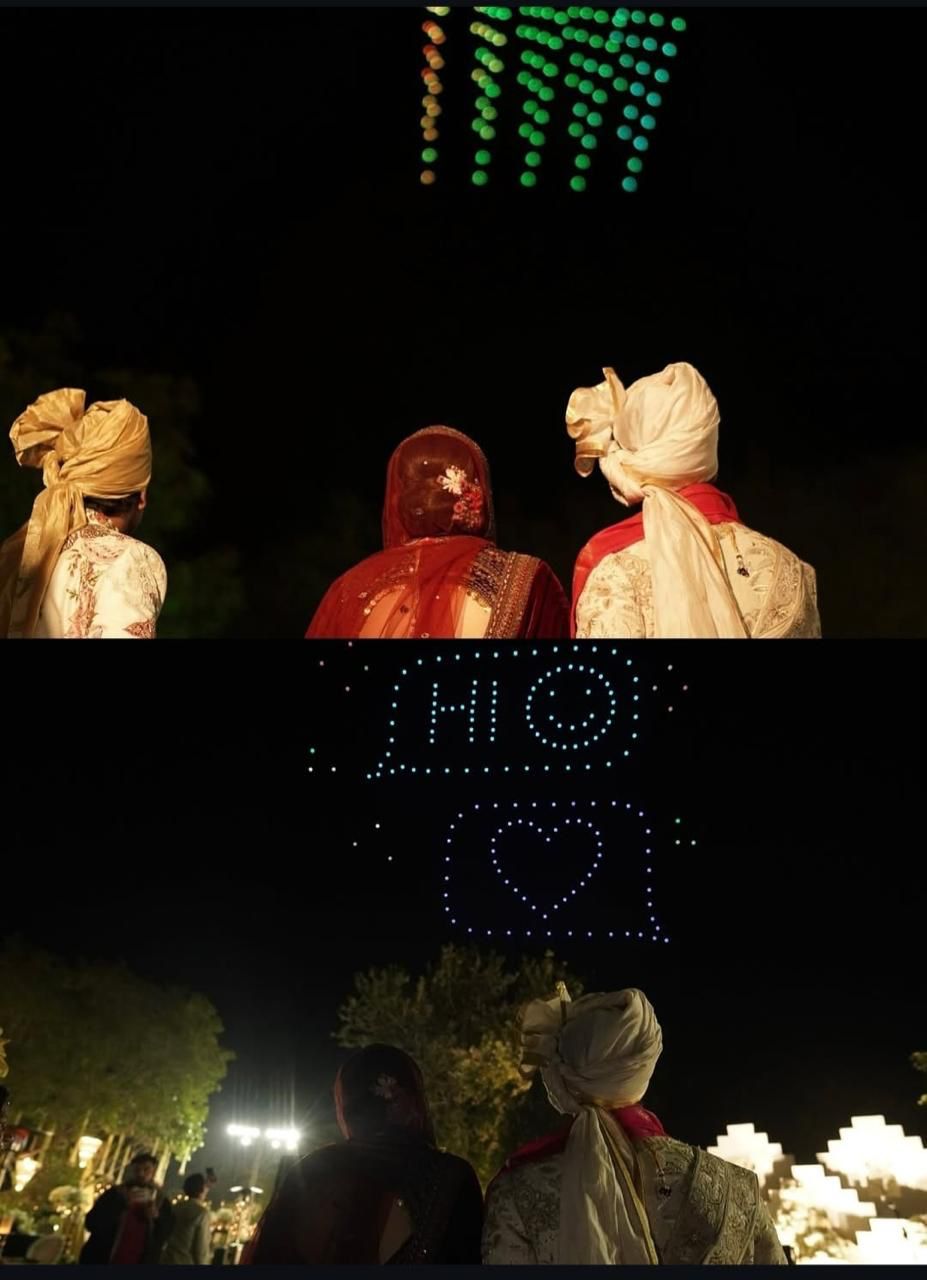
Alila Fort Bishangarh is roughly 230 years old, built as a Rajput garrison long before anyone was thinking about airspace clearances or GPS. Flying 200 drones directly above its ramparts for a wedding was one of those jobs where the venue does half the work for you, and the other half is making sure you don't damage three centuries of stonework in the process.
Working With the Fort, Not Against It
The choreography was designed around the fort's actual silhouette rather than a generic formation set. Drones launched from behind the ramparts, so the first thing guests saw was light rising out of the fort itself, as if the building were the source. The towers gave us natural staging points to trace outlines from, and we used that instead of fighting it.
Names, a Taj Mahal Silhouette, and a Light Waterfall
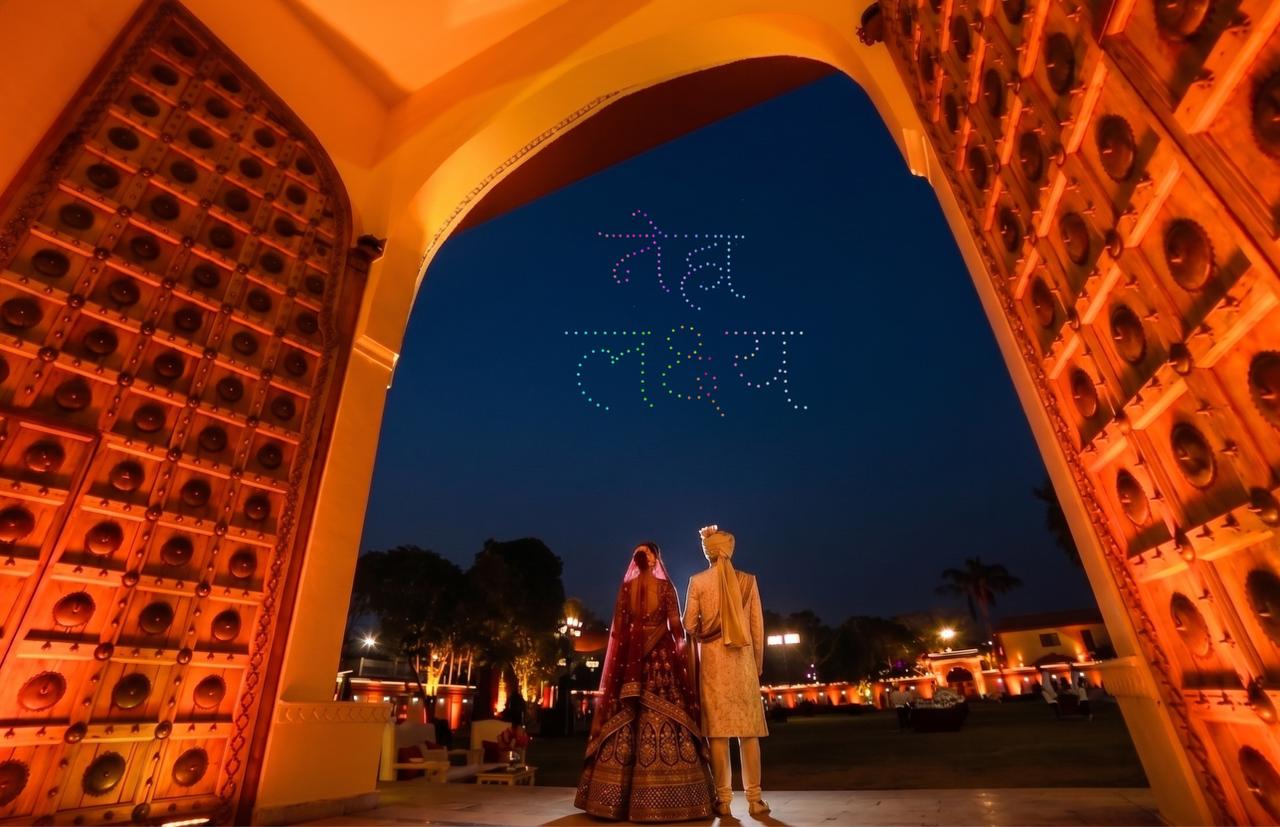
The sequence moved through the couple's names, a heart formation, and, as a nod to India's most recognisable monument, a Taj Mahal silhouette rendered in white light. It closed with a cascade effect: drones descending in a staggered wave that reads, from the ground, like a waterfall of light pouring down the fort's face.
Why Heritage Venues Work So Well for This
Fireworks and heritage architecture don't mix, there's real fire risk near centuries-old stone and timber, which rules out a lot of traditional options for venues like this. Drones solve that outright: no flame, no debris, nothing landing on a protected structure. What's left is just the contrast that makes the show work in the first place, ancient stone lit from above by 200 points of GPS-precise light, something the fort has never seen in its 230 years standing.
The Takeaway
Guests watched from the rooftop terrace, which put them essentially level with parts of the formation rather than looking straight up, a genuinely different viewing experience from a ground-level show. If you're planning a wedding at a heritage property, this is usually the first question we ask: where will people actually be standing, because it changes how we design the whole sequence.
See the show page, more drone shows in Jaipur, and what else goes into wedding drone shows.